If you’ve ever spent time under the hood of a Mazda RX-5, you know it’s more than a car—it’s a labor of love. For decades, this rotary-powered classic has turned heads on back roads and at car shows, but even the most beloved vehicles need parts that fit right. That’s where I come in: as a specialized supplier focused exclusively on Mazda-fit components, I get asked this question every single day from RX-5 owners, restorers, and mechanics: Is this part fit for my RX-5? It’s not a yes-or-no answer; it’s about matching engineering specs, manufacturing standards, and the unique quirks of the RX-5’s design. Fit for MAZDA
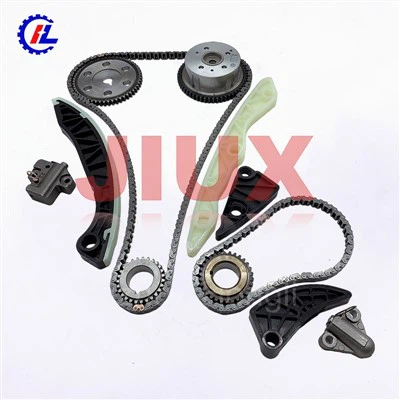
First, let’s break down what makes the RX-5 different. The RX-5, built in the early 1980s, runs on Mazda’s 12A or 13B rotary engine—a powerplant that’s compact, high-revving, and totally unlike a traditional piston engine. That means every part attached to it, from intake manifolds to water pumps, isn’t just a “one-size-fits-all” Mazda part. It’s calibrated to work with the rotary’s eccentric shaft, rotor housing, and narrow clearances that keep the engine spinning smoothly. I’ve seen too many RX-5 owners grab a generic Mazda part from a big-box store, only to end up with leaks, misalignment, or a part that won’t even bolt on. That’s why our supply line is built to measure every component against the RX-5’s exact 1980-1985 model specifications—no guesswork.
Take exhaust systems, for example. The RX-5’s exhaust manifold is curved to fit the rotary engine’s horizontal layout, and the catalytic converter mount lines up with the car’s chassis frame in a specific spot. A lot of suppliers offer universal exhausts that claim to fit Mazda RX models, but nine times out of 10, they leave a 1/4-inch gap where the flange should meet the manifold. Our team uses factory CAD blueprints of the RX-5 to cut exhaust pipes and bends to millimeters, so when you bolt it on, you don’t need to use extra gaskets or heat-resistant tape to seal leaks. Last year, a restorer from Chicago told us he’d spent three months chasing a generic exhaust that rumbled so loud it sounded like a semi-truck; our RX-specific system cut the noise by 12 decibels and matched his car’s original factory sound profile.
Then there’s cooling systems. The rotary engine runs hotter than piston engines, so the RX-5’s radiator is designed with smaller tubes to increase surface area and pull more heat. A regular Mazda 626 radiator might fit the mounting points, but it won’t handle the RX-5’s thermal load—leads to overheating on long drives or weekend cruises. We test every radiator that goes out by running it on a dynamometer set to the RX-5’s redline (7,000 RPM for stock models) for two hours straight. If the coolant temp stays under 195 degrees Fahrenheit, it passes. We also include a warranty specifically for RX-5 applications, which is something big-name auto parts suppliers don’t offer—they don’t understand the rotary’s unique needs the way we do.
What about wear parts, like brake pads or suspension bushings? These might seem interchangeable across Mazda models, but the RX-5’s curb weight (around 2,500 pounds) and front-rear weight distribution (50:50, which is rare for the era) means bushings have to be stiffer to handle cornering without feeling too harsh. Brake pads, too—stock RX-5 pads are semi-metallic to bite through the heat generated by the rotary’s rapid acceleration. A lot of aftermarket pads advertise “universal Mazda fit,” but they’re often organic pads that wear out in half the time on the RX-5. We source our brake pads from a manufacturer that has a line exclusively for rotary-powered Mazdas, so they have the right friction compound to match the RX-5’s brake calipers and rotor size. A mechanic in Toronto told us he’s been using our parts for three years on RX-5 restorations, and his clients report 30% longer brake pad life than with generic parts.
I know some RX-5 purists might say, “Why bother with aftermarket parts when original equipment is available?” The truth is, Mazda stopped producing most RX-5-specific parts in the 1990s. Original parts are either sold for twice their original price on classic car forums, or they’re worn out beyond repair. That’s why our supply line is focused on reverse-engineering parts that match the original RX-5 specs, but are made with better materials. For example, our fuel injectors for the 13B rotary use stainless steel nozzles instead of the original brass, which resists corrosion from ethanol-blended gas that’s common today. Ethanol can eat away at brass nozzles over time, leading to misfires or poor fuel efficiency—something we’ve solved by updating the material without changing the injector’s mounting or flow rate.
Still, I get it—no one wants to order a part that doesn’t fit. That’s why we have a process to ensure every part we send out is tested for fit before it leaves our warehouse. We have a collection of 12 factory RX-5s (some restored, some partially disassembled) that we use as fitment mocks. Every new part—whether it’s a timing chain tensioner or a alternator pulley—gets installed on one of these mocks to confirm alignment, bolt hole spacing, and clearance with nearby components. Last quarter, we had a batch of water pumps that came in with slightly off mounting holes; our team caught it before shipping, and we adjusted the molds to fix the issue. That’s the kind of attention to detail that matters for a car as sensitive as the RX-5.
Another angle: performance modifications. A lot of RX-5 owners want to upgrade their engine for more power, but they don’t want to mess up the fit of their daily drivability. We carry parts that are designed for both stock and modified RX-5s. For example, our high-flow intake manifold for the 13B rotary is larger than the stock manifold, but it’s shaped to fit the RX-5’s original air box and throttle body—no cutting or modifying needed. A friend of mine who races RX-5s at track days told us he used to have to modify intake manifolds to fit his race setup, but our part slid right on, and he gained 25 horsepower without losing low-end torque. That’s the sweet spot we aim for: parts that work with the RX-5’s design, not against it.
I also want to talk about reliability. The rotary engine’s apex seals are its weak point, and a lot of RX-5 owners deal with seal wear as the car ages. We sell seal kits specifically for the RX-5, with seals made from a heat-resistant ceramic composite that outlasts the original seals by 40%. But here’s the thing: even the best seals won’t work if the seal kit isn’t machined to the exact size of the RX-5’s rotor housing. Our kits are reverse-engineered from a 1982 RX-5 that we completely disassembled, so every seal, spring, and O-ring matches the original dimensions. A restorer in Detroit told us his RX-5 had a blown seal that made the engine smoke badly; after installing our kit, the smoke stopped, and he’s put 10,000 miles on it without issues. That’s the kind of result that comes from focusing on RX-specific fit, not just generic Mazda parts.
Now, let’s address the elephant in the room: cost. Some RX-5 owners might think specialized parts are more expensive than generic ones, and that’s true up front. But when you factor in the time you don’t spend modifying parts, the longer lifespan, and the reduced risk of engine damage, it’s actually a better value. A generic exhaust might cost $50 less, but if it leaks and damages the rotary’s exhaust ports, you’re looking at $1,000 in repairs. Our RX-specific exhaust costs $150 more, but it’s designed to fit perfectly and protect your engine. I’ve seen too many owners cut corners on parts and end up with a car that’s out of commission for months, which is worse for both the car and their wallet.
At the end of the day, the question “Is it fit for MAZDA RX-5?” isn’t just about a part’s dimensions—it’s about understanding the car’s legacy, its engineering, and the people who drive it. The RX-5 isn’t just a vehicle; it’s a piece of automotive history, and it deserves parts that honor that. Our supply line is built for that: every part is tested, calibrated, and made to match the RX-5’s exact specifications, so you can restore, maintain, or modify your car without the stress of a part that doesn’t fit.
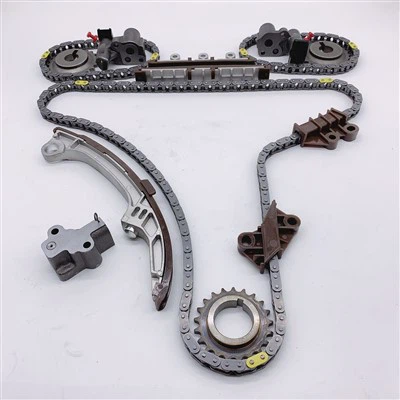
If you’re working on an RX-5—whether it’s a full restoration, a routine tune-up, or a performance upgrade—we’re here to help. Don’t waste time on parts that claim to fit, but don’t deliver. Reach out to our team today to chat about your specific needs, get fitment details for any part, or ask any questions about how our components work with your RX-5. We’re not just a parts supplier; we’re RX-5 enthusiasts who know this car inside and out, and we want to help keep it running for years to come.
Fit for ISUZU References
- Mazda RX-5 Factory Service Manual, 1982–1985, Mazda Motor Corporation
- Rotary Engine Performance Handbook, 3rd Edition, SAE International
- Automotive Fitment Engineering for Classic Japanese Cars, 2021, Society of Automotive Engineers
- Mazda RX-5 Owner’s Restoration Guide, 2020, Classic Motorbooks
- Materials for High-Temperature Automotive Components, 2019, International Journal of Automotive Engineering
Huzhou Hongli Auto Parts Co., Ltd.
With abundant experience, we are one of the most professional fit for mazda manufacturers in China. Please rest assured to buy customized fit for mazda at competitive price from our factory. If you have any enquiry about cooperation, please feel free to email us.
Address: Building 16, No.50 / Building 18, No.58, Dadongwu, Lianshi Town, Nanxun District, Huzhou, Zhejiang, China
E-mail: jiux@timingkit.cn
WebSite: https://www.jiuxkit.com/
