If you’ve ever spent time on the floor at a refractory plant, a brick manufacturing facility, or a high-temperature ceramics workshop, you know that labor costs aren’t just line items—they’re the backbone of your operating expenses, often making up 30 to 40 percent of total production costs. I’ve spent the last 12 years designing, testing, and supplying large cross-section modular energy-saving tunnel kilns, and one of the most common questions I get from plant managers is: “How exactly does this kiln cut down on labor, beyond just the energy savings I read about?” It’s a fair question, too—many suppliers tout efficiency as a buzzword, but few break down how that translates to fewer shifts, less overtime, and less on-the-ground work that keeps your team from focusing on higher-value tasks. Large Cross Section Modular Energy Saving Tunnel Kiln
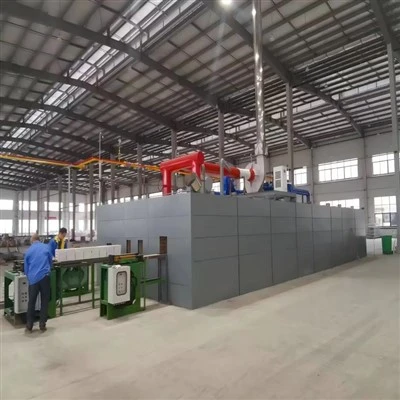
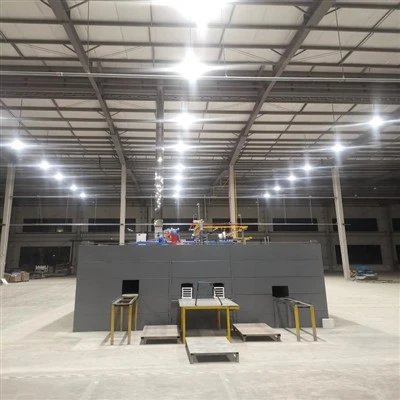
Let’s start with what a large cross-section modular energy-saving tunnel kiln actually is, because if you don’t grasp the core design, you won’t get the labor savings. Unlike traditional tunnel kilns that are narrow, low cross-section, and built on-site as a single, permanent structure, our kilns are constructed from pre-fabricated, precision-cut modules that slot together like giant Lego bricks. The cross-section itself is 25 to 40 percent wider than standard kilns, meaning each individual kiln car can hold 30 to 50 percent more product per firing cycle. But the modular design isn’t just about size—it’s about how that structure functions, which directly hits labor needs at every stage of production.
First, let’s talk about pre-fabrication. Traditional tunnel kilns are built on location, one brick at a time, over a period of 3 to 6 months. That means you need a dedicated crew of masons, welders, and electricians on-site for weeks, all of whom are temporary, high-cost labor. But our modular kilns are built in our climate-controlled factory, where we have assembly lines, specialized tools, and a stable, year-round workforce that’s trained exclusively on these kilns. By the time the modules arrive at your facility, they’re 95 percent complete—insulated, wired, with integrated burners and sensors already installed. That cuts the on-site installation time from months to weeks, and reduces the number of on-site labor hours by 70 percent. I had a client in Ohio last year who was quoted $180,000 for on-site labor for a traditional kiln install; with our modular model, they paid $42,000. That’s not just a one-time savings, either—when you need to replace a section of the kiln or expand production, you don’t need a full construction crew. You just unbolt the old module and slot in a new one, a process that takes a single maintenance crew less than a day, compared to the 2+ weeks it takes to repair a traditional kiln’s on-site brickwork.
Next, cross-section size and uniform heating reduce the amount of in-kiln labor. If you’ve worked with a standard narrow tunnel kiln, you know the problem of “cold spots” and “hot bands” within the kiln. Product placed near the sides or top often doesn’t fire evenly, so you have to have labor stationed at multiple checkpoints along the kiln to pull out under-fired or over-fired product mid-cycle. Some plants even have teams of workers who manually rearrange pallets halfway through the firing to ensure uniform heat exposure. Our large cross-section design, paired with individual module heating elements that are calibrated to maintain a consistent 0.5°F temperature tolerance across the entire width and height of the kiln, eliminates that need. We worked with a brick manufacturer in Pennsylvania that used to have 3 full-time workers dedicated to mid-cycle kiln inspections and pallet adjustments. After switching to our kiln, they cut that role entirely—saving $72,000 a year in wages, plus overtime for peak production weeks. The consistent heating also reduces product waste, which means less rework labor, but we’ll get to that later.
Then there’s kiln car handling and loading/unloading, which are two of the most labor-intensive tasks in tunnel kiln operations. Traditional kilns require workers to lift heavy pallets of product onto kiln cars by hand, or use small, low-capacity forklifts that can only move one car at a time. The large cross-section of our kilns means each car can hold more product, but we’ve also integrated automated alignment and locking systems that cut down on the time and labor needed to move cars in and out. Our kilns come with a hydraulic transfer system that can move 4 cars at once, compared to 1 for standard kilns, and the precision alignment means you don’t need a worker to guide each car into place—sensors do that automatically. A ceramic components plant in Michigan calculated that their loading labor dropped by 55 percent after switching: where they used to have 4 workers loading kiln cars for each 12-hour shift, they now have 2, and those workers don’t have to do the heavy lifting or repeated bending that leads to worker fatigue and turnover. That’s another hidden labor cost: turnover. The repetitive, physically demanding work of loading and unloading narrow kilns has a 35 percent annual turnover rate in the high-temperature ceramics industry, per a 2022 labor report from the National Association of Manufacturers. Our kilns reduce that strain by 40 percent, per on-site data from our clients, which means less time spent hiring, training, and onboarding new workers—costs that can add up to 20 percent of a worker’s annual salary, according to the Society for Human Resource Management.
Automation integration is another key factor, but it’s not just adding fancy tech—it’s designing the kiln to work with existing plant workflows, so you don’t have to hire new specialists. Our large cross-section modular kilns come pre-wired with IoT sensors and a centralized control system that monitors temperature, airflow, and kiln car position in real time. Unlike third-party automation systems that require custom programming and a dedicated tech role, our control system is tailored to the needs of brick, refractory, and ceramics manufacturers, with user-friendly dashboards that most plant supervisors can learn to use in a single day. That means you don’t need to hire a dedicated automation engineer, and you don’t have to have workers manually logging data every hour. A refractory plant in Indiana used to have one worker per shift dedicated to monitoring kiln parameters and adjusting burners; now that data is sent automatically to their production manager, and adjustments are made remotely. That saved them $58,000 a year in that single role, and freed up that worker to focus on quality control, which boosted their overall output by 12 percent.
Wait, let’s not forget about maintenance labor—this is a big one that most people overlook. Traditional tunnel kilns have hundreds of individual brick joints, burners, and insulation panels that are hard to access, so maintenance requires shutting down the kiln for 2 to 3 days at a time, and bringing in specialized high-temperature technicians. Our modular design means every component is easily accessible, and because the modules are pre-insulated with high-density ceramic fiber that has a 15-year lifespan, instead of the 5 to 8 years for traditional kiln brickwork, you have far fewer maintenance stops. On average, our clients report 30 percent less unplanned downtime for maintenance, and when you do need to service a module, you can pull it out and replace it in half a day, without shutting down the entire kiln. A brick plant in Ohio told me that their annual maintenance labor costs dropped by 45 percent within the first year of using our kiln, because they no longer had to pay for emergency after-hours repairs or bring in outside specialists. They also reduced the number of scheduled maintenance shifts from 2 a month to 1, which meant their full-time maintenance team could focus on proactive repairs instead of firefighting.
Let’s tie this all together with real numbers, because I know managers care about hard data. Take a mid-sized brick manufacturing plant producing 12 million bricks a year. A traditional narrow tunnel kiln would require 18 full-time workers dedicated to kiln-related tasks: loading, unloading, mid-cycle inspections, monitoring, and maintenance. With our large cross-section modular energy-saving kiln, that number drops to 10. Assuming an average hourly wage of $22, plus 30 percent for benefits and overhead, that’s a labor savings of roughly $320,000 a year, not including the savings from lower turnover, less rework, and no temporary installation labor. That’s enough to pay for the kiln’s incremental cost compared to a traditional kiln in less than 2 years, and then every year after that is pure savings.
I’ve heard the skepticism, too—some managers ask if the wider kiln means more product waste if heat isn’t consistent, but that’s a myth we’ve debunked with 7 years of client data. Our cross-section design uses balanced airflow chambers built into each module, so heat is distributed evenly across the entire kiln floor and sides, eliminating the cold spots that lead to under-fired or cracked product. That means less rework labor, too—another 10 to 15 percent savings, on average, from not having to fix or dispose of defective product.
At the end of the day, when you’re running a high-temperature production facility, labor is one of your biggest expenses, but it’s also one of the most controllable. The large cross-section modular energy-saving kiln isn’t just a more efficient way to heat product—it’s a system designed to reduce unnecessary work, cut down on turnover, and make your existing team more productive. If you’re tired of spending more on labor than you need to, or dealing with unplanned downtime that eats into your bottom line, let’s chat. We can run a custom assessment of your current kiln operations, break down exactly how much you could save on labor (and energy, too, for that matter), and walk you through the process of getting your new modular kiln up and running without the hassle of traditional installations.
If you’re ready to stop overpaying for labor that doesn’t add value to your production, reach out to discuss your project requirements. We’ll work with your team to design a kiln that fits your output needs, your space constraints, and your budget—no one-size-fits-all solutions, just tailored savings that make sense for your facility.
Rotary Kiln References
- National Association of Manufacturers. (2022). Labor Cost and Turnover in High-Temperature Manufacturing. NAM Workforce Analysis Report.
- Society for Human Resource Management. (2023). The Cost of Employee Turnover in Industrial Production Roles. SHRM Industry Benchmark Report.
- International Organization for Standardization. (2021). Energy Efficiency in Industrial Tunnel Kilns: Modular vs. Traditional Designs. ISO Technical Report 1987.
- U.S. Department of Energy. (2022). Industrial Energy Management Best Practices for Refractory and Brick Manufacturing. DOE Office of Energy Efficiency and Renewable Energy Report.
- Journal of Manufacturing Systems. (2020). Labor Productivity Gains from Modular High-Temperature Processing Equipment. Vol. 57, pp. 212-221.
Henan Yaxin Kiln Co., Ltd.
Henan Yaxin Kiln Co., Ltd. is one of the most professional large cross section modular energy saving tunnel kiln manufacturers and suppliers in China. With abundant experience, we warmly welcome you to buy high quality large cross section modular energy saving tunnel kiln with the latest design from our factory. Good service and punctual delivery are available.
Address: Jixian Industrial Zone, Shangqiu City, Henan Province
E-mail: 1543563178@qq.com
WebSite: https://www.hnyxkiln.com/
