If you’ve ever shipped a delicate, precision-built component like an embroidery machine spare part, you know there’s way more to the process than slapping a label on a box and handing it to a courier. As a third-generation owner of an embroidery machine spare parts supply business—we’ve been around since 1987, so we’ve seen every mistake and win in this line of work—I’ve learned that cutting corners on transport requirements doesn’t just risk damaged parts; it risks ruining a client’s entire production run. Over the years, I’ve had clients call me panicking at 2 a.m. because a $200 tension sensor arrived bent beyond repair, or a set of precision needle clamps got nicked, making every stitch their machine sewed off by a millimeter. Those days of learning the hard way have taught me that transporting embroidery machine spare parts isn’t like shipping random hardware. It has unique, non-negotiable requirements that every supplier, handler, and logistics team needs to respect. Let’s break down what those requirements actually are, and why they matter for small embroidery shops and large contract facilities alike. Embroidery Machine Spare Parts
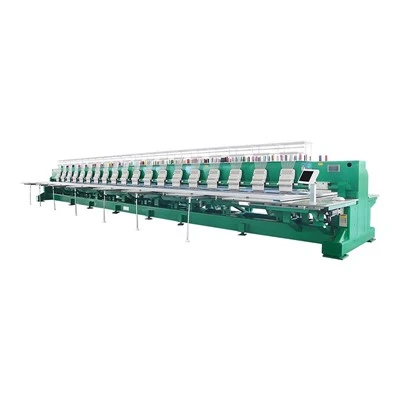
First, it’s important to distinguish between the types of embroidery machine spare parts, because their transport needs vary wildly. We categorize our parts into three groups: precision electronic components, mechanical parts, and consumable wear items. The precision stuff—think servo motors, control circuit boards, encoder disks, and tension regulators—are the most delicate. These aren’t just metal pieces; they have tiny circuit traces, calibrated sensors, and moving parts that can be knocked out of alignment with the slightest jolt, temperature swing, or static charge. I once had a client in Dallas order 12 servo drivers for their 12-head embroidery machine. Our standard packaging uses anti-static foam and corrugated boxes, but that time the courier stacked our shipment on top of a pallet of heavy steel parts, and the impact bent two of the servo’s mounting brackets, rendering them useless. That mistake taught me that weight distribution and cushioning aren’t afterthoughts—they’re core requirements for mechanical precision parts.
Then there are the mechanical parts: needle bars, gear sets, cam disks, and shaft assemblies. These parts are tougher than electronics, but they still have tight tolerances—most embroidery machines require parts machined to within 0.005 millimeters, smaller than the width of a human hair. A tiny scratch or a bent gear tooth can throw off an entire machine’s stitch pattern, leading to hours of rework or spoiled fabric. Consumable wear items—needles, bobbins, thread cutters, and bobbin winder brushes—are the lowest risk, but even these can be rendered useless if they’re exposed to moisture or stored incorrectly, which can make needles rust or thread fray before they even hit the production floor.
So what are the specific transport requirements that set these parts apart from other industrial goods? Let’s start with static control, a rule that’s non-negotiable for all electronic components. Static electricity is a silent killer for circuit boards and microchips. A static discharge so small you can’t feel it can fry a sensitive component’s internal circuitry, leaving it dead even if there’s no visible damage. For years, we used generic anti-static bubble wrap, but we switched to conductive corrugated boxes and static-dissipative foam inserts about five years ago after a batch of control boards arrived dead at a client’s plant in Atlanta. The courier had used a standard box that let static build up during transit, and when the client plugged the boards in, none of them worked. Now, every electronic part we ship is packaged in materials tested to meet ANSI/ESD S20.20, the global standard for electrostatic discharge protection. We also label every ESD package with a bright yellow “Static Sensitive – Handle with Care” sticker, and we only use couriers trained to identify and handle ESD shipments. It’s an extra cost, but it saves us (and our clients) thousands in lost parts and downtime.
Next, temperature and humidity control is another critical requirement, even if it’s less talked about than static. Most people don’t realize that mechanical parts can warp in extreme temperatures, and electronics can develop condensation if they shift between hot and cold environments too quickly. For example, if a shipment of precision gears is sent from a cold warehouse in Michigan to a hot, humid facility in Florida, the metal can expand and contract unevenly, throwing its tolerance off. We once had a client in Miami order a set of cam disks in July, when Florida’s humidity was over 90%. The courier left the shipment in their unmarked van for four hours in direct sunlight, and when the parts arrived, their plastic coating had bubbled, and the metal cam surfaces had developed a thin layer of condensation. We had to replace the parts at no cost, and the client lost three days of production waiting for the new shipment. After that, we updated our transport guidelines to require temperature-controlled vehicles for all precision electronic and mechanical parts when outside temperatures are above 85°F or below 40°F, and we add desiccant packets to every package to absorb excess moisture. We also include a small moisture indicator card in each box, so we can see at a glance if the package was exposed to high humidity during transit—no more guessing.
Cushioning and securing parts for impact and vibration is another non-negotiable, especially for mechanical and precision electronic parts. Embroidery machines run at high speeds—some commercial models sew over 1,500 stitches per minute, so their parts are designed to be precise under constant motion, but that also makes them vulnerable to sudden shocks. We test all our packaging by simulating drops from 3 feet (the standard for industrial shipping) and vibration levels matching long-haul truck transport. For parts like needle bars, which are long and thin, we use custom-cut foam inserts that hold the part in place so it can’t shift during transit—no more loose parts banging against each other in a box. For heavier parts like servo motors, we use double-walled corrugated boxes with corner protectors, and we fill any empty space with pressure-cushioned foam so there’s no room for movement. We also never stack heavy items on top of embroidery parts—our boxes are labeled with weight limits, and we require our logistics partners to follow them. That’s another rule we learned the hard way: the Dallas servo shipment fiasco? That was because the courier ignored our weight limit and stacked a 50-pound pallet on top of our 10-pound box of servos. Now we have a written agreement with every courier we work with that spells out these requirements, and we check every shipment before it leaves our warehouse to make sure it’s packed correctly.
Special handling and labeling are often overlooked, but they make a huge difference in how parts are treated during transit. Unlike generic industrial parts, embroidery machine spare parts are often time-sensitive. A embroidery shop can’t afford to wait a week for a replacement needle bar when their busy season for custom logos and team apparel is in full swing. That means we often ship parts via expedited air or ground, but we also need to make sure the parts aren’t lost or misrouted. We label every package with our client’s specific machine model number—this is key, because embroidery machines from different brands (Barudan, Tajima, Brother, etc.) have unique part dimensions, and a misrouted part for a Tajima machine is useless for a Brother shop. We also add fragile, keep upright, and do not stack labels to every package, and we mark ESD parts clearly so couriers know not to handle them with tools that could generate static, like metal pry bars. We even include a small insert in every package that lists the part number, model compatibility, and handling instructions, so if the package is opened mid-transit (which does happen occasionally with large shipments), the handlers know exactly how to treat the parts inside.
I know some smaller suppliers might think these requirements are overkill, especially if they’re shipping small quantities. But even a single replacement tension sensor for a home embroidery machine or a small 2-head shop is essential—if it arrives damaged, the shop can’t run, and they’ll blame you, not the courier. That’s why we’ve adjusted our packaging for small, single-part shipments too: even a $10 bobbin case gets its own custom foam insert, not just a bubble wrap envelope. We once shipped a single tension sensor to a client in rural Oregon, and the USPS’s standard mail envelope had been crushed in their sorting machine. The sensor was bent, and the client missed a 200-order custom run. After that, we started using rigid cardboard mailers for all single parts, even small ones, and it’s cut our damaged small-part shipments by 90%.
Another thing I wish more people understood is that these requirements extend beyond just the packaging and shipping process. As a supplier, we need to communicate clearly with our clients about what to expect. We tell them exactly how parts are packaged, what temperature range they’re designed to handle, and how long transit will take. We also send tracking updates so clients know when their shipment will arrive, and we follow up with them to make sure parts are in good condition when they unbox them. If a part is damaged, we have a clear process for filing claims with the courier, and we replace the part quickly—no red tape, no delays. That trust is what keeps our clients coming back, year after year.
I’ve seen too many small embroidery shops go out of business because of a single damaged spare part that caused production to stop. It might seem like a small component, but for a business that relies on fast, consistent embroidery, it’s the difference between meeting a deadline and losing a client. That’s why we don’t cut corners on transport for our embroidery machine spare parts. Every box that leaves our warehouse is packed with care, every shipment is handled according to strict guidelines, and every part is labeled and tracked so we can be sure it arrives in perfect condition.
If you’re an embroidery shop owner or production manager looking for reliable, high-quality embroidery machine spare parts that arrive on time and undamaged, we’re here to help. We understand how critical these parts are to your business, and we have the experience and processes to make sure your shipments are handled exactly as they should be. Reach out to us to discuss your specific needs, whether you need a single replacement part for a small home machine or a bulk order for a large contract embroidery facility. We can help you find the right parts, provide transparent shipping details, and make sure you get the components you need to keep your production running smoothly.
Embroidery Machine Spare Parts References
- American National Standards Institute. (2020). ANSI/ESD S20.20: electrostatic discharge control program for protection of electronic assemblies, devices, and equipment. ANSI.
- International Organization for Standardization. (2018). ISO 12100: safety of machinery – general principles for design – risk assessment and risk reduction. ISO.
- Fabric and Garment Manufacturers Association. (2022). Best practices for transporting industrial sewing and embroidery components. FGMA Technical Bulletin Series.
- National Aerospace Standards. (2019). NAS 410: packaging of aerospace equipment for transport and storage. SAE International.
Yiwu Kuhao Import and Export Co., Ltd.
As one of the most professional embroidery machine spare parts manufacturers in China, our products have good reputation in the market. Welcome to buy discount embroidery machine spare parts made in China here and get quotation from our factory. All customized products are with high quality and low price.
Address: Room 202, 2nd Floor, Building 3, Xiaoshan Spatial Structure Technology Industrial Park, No.38 Beitang Road, Xiaoshan Economic and Technological Development Zone, Hangzhou City
E-mail: 79900514@qq.com
WebSite: https://www.kuhaoembroidery.com/
