Hey there, I’m Jake, and if you’ve ever worked with process equipment in oil & gas, petrochemicals, or even food and beverage, you probably know floating head heat exchangers are the unsung workhorses of the plant. They handle all the tough stuff—high temps, pressure swings, those tricky fluids that want to foul up every surface they touch. As someone who’s been supplying these bad boys for 12 years now, I’ve seen my fair share of breakdowns, headaches, and plant shutdowns that could’ve been avoided with a little know-how. Today, I’m breaking down how to troubleshoot the most common issues, straight from the field—no fancy jargon, just what actually works when you’re on a tight timeline and your operations team’s breathing down your neck. Floating Head Heat Exchangers

First off, let’s cut to the chase: floating head exchangers are designed to move heat between two fluids without seeping into each other, and their floating head design lets them expand and contract with temperature changes, which is why they’re so popular. But that flexibility is also their weak spot if something goes off-kilter. I’ve had clients call me at 2 a.m. because their unit’s leaking, or the pressure’s all wonky, and half the time, the fix isn’t a brand-new part—it’s just doing a little detective work. Let’s start with the most frequent culprit: tube leaks. This is the number one call I get, hands down.
Tube leaks usually show up as cross-contamination between the shell side and tube side fluids. Like, if you’re pumping crude through the shell and water through the tubes, suddenly you’ve got oil in your wastewater, or water getting into your process stream. First step here: grab your pressure gauges. Wait for the unit to fully depressurize—never work on a hot, running exchanger, that’s a beginner’s mistake. Once it’s safe, do a quick visual check of the tube ends at the tube sheet. If you see pitting, cracks, or even just tiny holes, that’s easy enough to spot. But if it’s not obvious, pull a sample from both sides and test for foreign fluids. Now, why are the tubes leaking? Three big reasons: fouling, corrosion, or vibration. Fouling builds up on the tube walls, makes them overheat, and eventually thins the metal until it breaks. I had a refinery client last year who skipped a routine cleaning, and their tubes got so plugged with catalytic fines that they overpressurized and ruptured half the tubes. Corrosion’s another big one—especially if your fluids have high chloride levels. Chlorides eat through tube metal like acid, and floating heads are extra vulnerable here because the floating end has a bit of clearance, so there’s more crevice space for corrosion to set in. Then there’s vibration—shell side velocity’s too high, and it makes the tubes slap against each other or the baffles. I once had a client who cranked up their flow rate to save time, and within a month, they had 20 tubes cracked from vibration. The fix? Slow that shell side flow a little, or add tube supports if the baffles are too spaced out.
Next issue: the floating head itself leaking. That’s trickier than tube leaks because the floating end’s hidden inside the shell. The floating head assembly has a gasket, right? If that gasket fails, you get external leaks, usually around the bonnet or the floating flange. First sign: oil spots on the shell side nozzle, or pressure dropping on the shell side even when the process isn’t running hard. Why does the gasket go bad? Thermal expansion is the main one—floating heads move, and if the gasket isn’t rated for the temperature swing, it compresses too much or stretches. Sometimes it’s just a bad installation—if you overtorque the bolts on the floating flange, you crack the gasket, or undertorque it and you get a gap. I once had a small chemical plant owner who tried to save time by not pulling the floating head out to inspect the gasket, and when he did finally remove it, half the gasket was torn because the bolts were unevenly torqued. Another thing: if there’s debris built up on the flange surface, that keeps the gasket from sealing properly. So when you pull the floating head, always check the flange for gunk—even a tiny piece of rust can cause a leak. One weird trick I’ve learned over the years: use a straight edge to check if the flange is warped. If it’s slightly bent, the gasket won’t sit right, and you’ll keep having leaks no matter how much you torque the bolts.
Then there’s pressure-related issues that aren’t exactly leaks but still kill performance. Like, the exchanger’s not transferring heat like it should, even when it’s running fine. That’s usually fouling, but not just tube fouling—shell side fouling too. The shell side is where the floating head is, so if there’s debris stuck around the floating head or the baffles, that blocks the flow of the shell side fluid, so it can’t pick up or drop heat. A lot of plants only clean the tubes during their annual shutdown, but if the shell side is full of scale, wax, or process solids, that’s a whole other bottleneck. I had a pipeline operator client who thought their exchanger was underperforming because of bad fluid flow, but when we pulled the floating head out, we found a chunk of polymer stuck between the floating head and the shell wall. It was blocking 30% of the shell side flow, so the heat transfer dropped by 25%—and they had no clue because they never checked the floating end. Another pressure issue: thermal stress that’s causing the floating head to bind. The whole point of the floating design is that it moves with temperature, but if something’s holding it back—like a broken guide rod, or corrosion on the floating shell—you get high stress that can crack the head or even the tubes. If you notice the pressure drop across the exchanger spiking for no reason, check the guide rods first. I keep a set of calipers in my tool bag for this—if the gap between the guide rod and its bracket is more than a quarter-inch, it’s probably bent, and the floating head is stuck.
Vibration’s such a big one, I should give it its own section because it causes so many different problems—tube cracks, gasket leaks, even floating head damage. Most people think vibration is just from high flow, but it can also be from uneven flow distribution, bad baffles, or tubes that aren’t properly supported. The key here is to do a vibration test when the unit is running at normal capacity, not just at startup. Use a handheld vibration meter (I recommend the Fluke 805, it’s cheap and easy to use) on the shell side and the tubes. If the vibration is over 0.5 inches per second at the tube sheet, you’ve got an issue. What can you do about it? If it’s baffles, space them closer together to add more support for the tubes. If it’s flow, adjust the nozzle size to make the velocity smoother. I once worked with a fertilizer plant that had terrible vibration because their shell inlet nozzle was too small, so the fluid was slamming into the tubes like a fire hose. We swapped the nozzle for a larger one, and the vibration dropped by 70%—no more cracked tubes, no more shutdowns.
Wait, let’s not forget about external leaks that aren’t from the floating head or tubes. Like, leaks at the nozzle connections, or the bonnet flange. A lot of people overlook these because they think the floating head is the only weak point, but no—nozzles take a lot of stress from piping expansion. If the piping isn’t properly anchored, it pulls on the exchanger nozzles every time the unit heats up or cools down, and that causes the flange to leak. I always tell my clients to do a “hot alignment check” every two years. Run the unit at normal operating temp, then check the gap between the flange faces with a feeler gauge. If the gap is uneven, that means the piping is pulling the flange out of alignment. Fix that by adding expansion joints to the piping, or adjusting the pipe supports. I had a power plant call me last spring because their exchanger was leaking at the shell nozzle, and after checking, we realized the pipe supports had rusted away, so the pipe was pulling the nozzle. We added new supports and an expansion joint, and the leak was gone in an hour—way cheaper than replacing the nozzle.
Now, a quick word on troubleshooting safety, because I can’t stress this enough. I’ve seen too many guys skip the lockout/tagout (LOTO) step and get burned, or hurt by high pressure. Every time you need to open the exchanger, whether it’s to check tubes or the floating head, make sure it’s fully depressurized, drained, purged of any hazardous fluids, and locked out. Also, wear proper PPE—heat-resistant gloves, safety glasses, steel-toe boots. The last thing you want is a trip to the hospital because you were in a hurry. And always, always follow the manufacturer’s guidelines for your specific exchanger. Different designs (like U-tube vs. floating head) have different tolerances, so don’t use generic rules—check the specs that came with your unit.
Once you’ve troubleshooted and fixed the issue, do a post-fix check. Run the unit at 50% capacity first, then ramp up to full. Check pressure drops, heat transfer rates, and look for any new leaks. I always recommend doing a pressure test after any repair—fill the shell side with water (or air, if it’s rated for it) at 1.5 times the operating pressure, hold it for 30 minutes, and make sure the pressure doesn’t drop. That way, you catch any leaks before the unit goes back to production.
Here’s the thing: most floating heat exchanger issues are preventable with routine checks. I tell all my clients to do a monthly visual inspection for leaks, a quarterly check of pressure drops, and an annual pull of the floating head to clean and inspect the gaskets and tubes. Spend a few hours a year on maintenance, and you’ll avoid the 3-day shutdown that costs you $100k+ in lost production. But when something does go wrong, don’t panic—follow the steps: check for leaks first, check pressure and flow, then look at vibration and corrosion.
At the end of the day, I’ve been in this game long enough to know that every plant’s issues are a little different, and sometimes you need a second pair of eyes. If you’re dealing with a persistent problem that you can’t figure out—whether it’s a weird leak, underperformance, or vibration that won’t go away—reach out to me or my team. We supply high-quality floating head exchangers and replacement parts, and we’ve got field techs who can come to your site to help troubleshoot, no matter where you are. We don’t push unnecessary parts, we just fix what’s broken and keep your unit running smoothly.
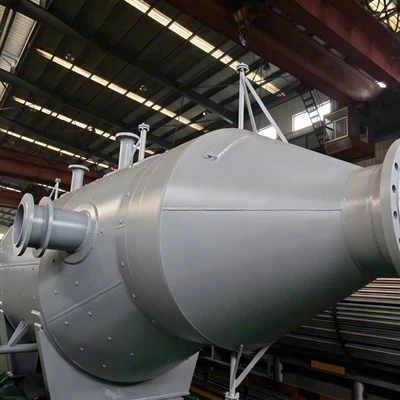
Don’t wait until a small problem becomes a big shutdown. Hit us up to talk through your floating head heat exchanger issues, whether you need a new unit, replacement components, or just someone to help you troubleshoot the problem right now. We’re here to keep your operations moving.
U-Tube Heat Exchangers References:
- Standards and Practices for Heat Exchanger Maintenance and Troubleshooting, Tubular Exchanger Manufacturers Association (TEMA), 2019.
- Process Equipment Reliability: Heat Exchanger Troubleshooting and Preventive Maintenance, American Institute of Chemical Engineers (AIChE), 2021.
- Field Guide to Floating Head Heat Exchanger Operation and Maintenance, Hydrocarbon Processing, 2020.
Shandong Meiling International Trading Co., Ltd.
We are one of the most professional floating head heat exchangers manufacturers and suppliers in China, featured by quality products and good service. Please feel free to wholesale advanced floating head heat exchangers made in China here from our factory. Customized orders are welcome.
Address: No. 998 Niushan Road, Linzi District, Zibo City, Shandong Province
E-mail: dingxiaoli@sdmeiling.com.cn
WebSite: https://www.ml-heatexchanger.com/
