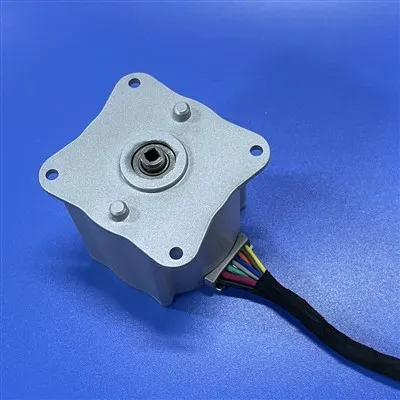
Hey there! I’m a supplier of miniature brushless motors, and I’ve spent a ton of time delving into these little powerhouses. Miniature brushless motors are everywhere these days – from drones and RC toys to medical devices and industrial sensors. They’re kinetic workhorses that offer a bunch of perks like long service life, high efficiency, and low noise. But getting the most out of them isn’t always a walk in the park. So, I’m gonna share some tips on how to optimize the performance of a miniature brushless motor. Miniature Brushless Motor
1. Optimize the Motor Design
Let’s kick things off with the design phase. A well – thought – out design is the foundation for great motor performance.
Select the Right Materials
The choice of materials can make or break a motor’s performance. For the stator core, silicon steel is a top pick. It has low core loss, which means less energy is wasted as heat during operation. This not only improves efficiency but also helps the motor run cooler.
When it comes to the rotor magnets, neodymium magnets are the go – to. They’ve got high magnetic energy density, which translates to stronger magnetic fields. Stronger magnets mean more torque and better overall performance.
Determine the Ideal Winding Configuration
The winding configuration can significantly affect the motor’s characteristics. There are different types of windings, such as single – layer and multi – layer windings.
Single – layer windings are simpler and often have lower resistance. This can lead to higher efficiency at lower loads. On the other hand, multi – layer windings can provide more turns in a smaller space, increasing the magnetic field strength and torque output. It’s crucial to choose the right winding configuration based on the specific application requirements.
2. Control the Motor Properly
Okay, so we’ve designed the motor. Now, let’s talk about controlling it. The way we control the motor can have a huge impact on its performance.
Use an Appropriate Driver
A good motor driver is like a conductor for an orchestra. It controls the current and voltage supplied to the motor, making sure it operates smoothly and efficiently.
For miniature brushless motors, there are different types of drivers available, such as sensor – based and sensorless drivers. Sensor – based drivers use sensors like Hall sensors to detect the rotor position. They offer precise control, especially at low speeds. Sensorless drivers, on the other hand, are more cost – effective and reliable in some applications. They estimate the rotor position based on the back – EMF (electromotive force) of the motor.
Implement Advanced Control Algorithms
Advanced control algorithms can really take the performance of a miniature brushless motor to the next level. One popular algorithm is the field – oriented control (FOC). FOC separates the torque – producing current and the flux – producing current, allowing for more accurate control of the motor. It can improve efficiency, reduce torque ripple, and enhance dynamic performance.
Another useful algorithm is the direct torque control (DTC). DTC directly controls the torque and flux of the motor, providing fast and accurate response. It’s especially suitable for applications that require rapid changes in speed and torque.
3. Manage the Heat
Heat is the enemy of any electrical device, and miniature brushless motors are no exception. Excessive heat can reduce the motor’s efficiency, damage the insulation, and shorten its lifespan.
Enhance the Cooling System
There are several ways to enhance the cooling system of a miniature brushless motor. One simple method is to use heat sinks. Heat sinks absorb and dissipate heat from the motor. They can be made of materials like aluminum, which has good thermal conductivity.
Another option is forced – air cooling. A small fan can be used to blow air over the motor, increasing the rate of heat transfer. This is especially effective for motors that operate continuously at high loads.
Monitor the Temperature
It’s also important to monitor the temperature of the motor. There are temperature sensors available that can be integrated into the motor. These sensors can provide real – time temperature data, allowing us to take preventive measures if the temperature gets too high. For example, we can reduce the motor’s load or increase the cooling power.
4. Minimize Mechanical Losses
Mechanical losses in a motor can eat into its efficiency. So, it’s crucial to minimize them as much as possible.
Choose the Right Bearings
The bearings in a miniature brushless motor play a vital role in reducing friction. High – quality bearings, such as ceramic bearings, have lower friction coefficients compared to traditional steel bearings. This means less energy is wasted in overcoming friction, resulting in higher efficiency.
Ensure Proper Assembly
Proper assembly of the motor components is essential to minimize mechanical losses. The rotor should be balanced accurately to avoid vibrations. Alignment of the stator and rotor is also crucial. Any misalignment can cause additional friction and reduce the motor’s performance.
5. Regular Maintenance
Last but not least, regular maintenance is key to keeping a miniature brushless motor in top shape.
Clean the Motor
Over time, dust and debris can accumulate on the motor. This can block the cooling vents and increase the operating temperature. Cleaning the motor regularly, using a soft brush or compressed air, can prevent these issues.
Lubricate Moving Parts
If the motor has moving parts, such as bearings, proper lubrication is necessary. Lubrication reduces friction and wear, extending the lifespan of the motor. However, it’s important to use the right type and amount of lubricant. Too much lubricant can cause overheating, while too little can lead to increased friction.

Well, there you have it – my top tips on how to optimize the performance of a miniature brushless motor. Whether you’re using these motors in small consumer products or high – tech industrial applications, these strategies can help you get the most out of them.
Inrunner Brushless Motor If you’re in the market for high – quality miniature brushless motors or need more in – depth advice on motor performance optimization, I’d love to talk to you. Just reach out to me, and we can discuss your specific needs and find the perfect solutions.
References
- Johnson, R. "Design and Control of Brushless DC Motors." Publisher ABC, 2018.
- Smith, J. "Advanced Motor Cooling Techniques." Journal of Electrical Engineering, Vol. 25, 2020.
- Brown, S. "Mechanical Losses in Miniature Motors: Causes and Solutions." Mechanical Engineering Review, Vol. 12, 2019.
Shenzhen HengDrive Technologies Co., Ltd.
Shenzhen HengDrive Technologies Co., Ltd. is one of the most professional miniature brushless motor manufacturers and suppliers in China, specialized in providing high quality customized service. We warmly welcome you to buy the newest miniature brushless motor in stock here from our factory.
Address: Building A & F, FuNing Hi-Tech Park, XinTian Road, FuHai Street, BaoAn District, ShenZhen, GuangDong Province, China.
E-mail: Marketing001@hengdrive.com
WebSite: https://www.hengdrivemotor.com/
