The cutting speed in a drilling and tapping center is a critical parameter that significantly influences the performance, efficiency, and quality of machining operations. As a supplier of drilling and tapping centers, I’ve witnessed firsthand how understanding and optimizing cutting speed can make a substantial difference in our customers’ manufacturing processes. Drilling and tapping center
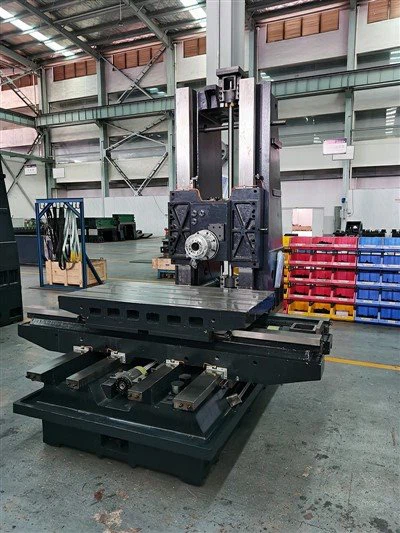
Cutting speed, often denoted as "Vc," is defined as the rate at which the cutting edge of the tool passes over the surface of the workpiece. It is typically measured in meters per minute (m/min) or feet per minute (ft/min). In the context of a drilling and tapping center, which is a machine tool used for drilling holes and creating internal threads (tapping), the cutting speed plays a dual – role. For drilling, it affects how quickly the drill bit penetrates the material, and for tapping, it determines the speed at which the tap forms the threads inside the hole.
Factors Affecting Cutting Speed
Material Properties
One of the most fundamental factors influencing cutting speed is the material of the workpiece. Different materials have varying hardness, toughness, and thermal conductivity, which directly impact the cutting process. For example, when machining aluminum, a relatively soft and ductile material, a higher cutting speed can be used. Aluminum has excellent thermal conductivity, which helps dissipate heat generated during cutting. A cutting speed of around 100 – 300 m/min is commonly used for aluminum drilling in a drilling and tapping center.
On the other hand, when working with stainless steel, which is much harder and has lower thermal conductivity, a lower cutting speed is required. Stainless steel tends to work – harden during machining, causing excessive wear on the cutting tool. A typical cutting speed for stainless steel drilling might range from 20 – 50 m/min. Titanium, known for its high strength – to – weight ratio and poor thermal conductivity, demands even lower cutting speeds, often in the range of 10 – 30 m/min.
Tool Material
The choice of cutting tool material also has a profound effect on the allowable cutting speed. High – speed steel (HSS) tools are widely used for general – purpose drilling and tapping. They are relatively inexpensive and offer good toughness. However, their cutting speed capabilities are limited compared to other tool materials. HSS tools can typically handle cutting speeds in the range of 20 – 60 m/min depending on the workpiece material.
Cemented carbide tools, on the other hand, are much harder and more wear – resistant than HSS. They can withstand higher cutting speeds and are commonly used for high – productivity machining. For example, carbide drill bits can achieve cutting speeds of 80 – 200 m/min when drilling steel. Coated carbide tools, which have a thin layer of coating such as titanium nitride (TiN) or titanium aluminum nitride (TiAlN), offer even better performance and can further increase the cutting speed.
Tool Geometry
The geometry of the cutting tool, including the point angle, helix angle, and flute design, affects the cutting speed. A drill bit with a proper point angle can reduce the cutting force and improve the chip evacuation. For example, a standard point angle of 118° is commonly used for general – purpose drilling, but for harder materials, a larger point angle (e.g., 135°) may be more suitable as it provides a stronger cutting edge.
The helix angle of the drill bit also influences the cutting process. A higher helix angle is beneficial for chip evacuation, especially when drilling deep holes. However, it may reduce the strength of the drill bit. For tapping, the thread form and the number of flutes on the tap affect the cutting speed and the quality of the threads.
Importance of Optimal Cutting Speed
Tool Life
Maintaining an optimal cutting speed is crucial for maximizing tool life. If the cutting speed is too high, the cutting tool will experience excessive wear and heat generation, leading to premature tool failure. The heat generated at high cutting speeds can cause the tool material to soften, reducing its hardness and wear resistance. On the other hand, if the cutting speed is too low, the tool may rub against the workpiece rather than cut, resulting in increased friction, poor surface finish, and also reduced tool life due to built – up edge formation.
Surface Finish
The cutting speed also has a direct impact on the surface finish of the machined part. A proper cutting speed ensures smooth chip formation and removal, which leads to a better surface finish. When the cutting speed is too high, the chips may break irregularly, causing rough surfaces and even tool chatter. Conversely, a very low cutting speed may cause the tool to plow through the material, leaving behind rough marks on the workpiece surface.
Productivity
Optimal cutting speed is essential for achieving high productivity in a drilling and tapping center. By using the correct cutting speed, the machining operation can be completed in a shorter time without sacrificing tool life or part quality. This is particularly important in mass production environments where reducing cycle times can significantly increase the overall output of the manufacturing process.
Determining the Cutting Speed
Manufacturer’s Recommendations
Tool manufacturers usually provide recommended cutting speeds for their products based on the workpiece material and tool type. These recommendations are a good starting point for setting the cutting speed in a drilling and tapping center. However, it’s important to note that these are general guidelines, and actual optimal cutting speeds may vary depending on specific machining conditions such as machine rigidity, coolant usage, and part geometry.
Trial and Error
In some cases, trial and error may be necessary to determine the best cutting speed. By starting with the manufacturer’s recommended cutting speed and gradually adjusting it based on the observed tool wear, surface finish, and cutting performance, operators can find the optimal cutting speed for a particular application. This method allows for fine – tuning the cutting process to suit the specific requirements of the machining job.
Using Cutting Data Libraries
Many modern drilling and tapping centers are equipped with cutting data libraries or software that can calculate the optimal cutting speed based on the input parameters such as workpiece material, tool material, and tool diameter. These libraries are based on extensive research and testing and can provide accurate cutting speed recommendations.
Controlling the Cutting Speed in a Drilling and Tapping Center
In a drilling and tapping center, the cutting speed can be controlled by adjusting the spindle speed. The relationship between cutting speed (Vc), spindle speed (n), and tool diameter (D) is given by the formula:
[Vc=\frac{\pi Dn}{1000}]
Where Vc is in m/min, D is the tool diameter in mm, and n is the spindle speed in revolutions per minute (rpm). By rearranging the formula, the required spindle speed can be calculated as:
[n=\frac{1000Vc}{\pi D}]
Modern drilling and tapping centers are equipped with advanced control systems that allow for easy adjustment of the spindle speed. This ensures that the cutting speed can be maintained at the optimal level throughout the machining process.
Conclusion
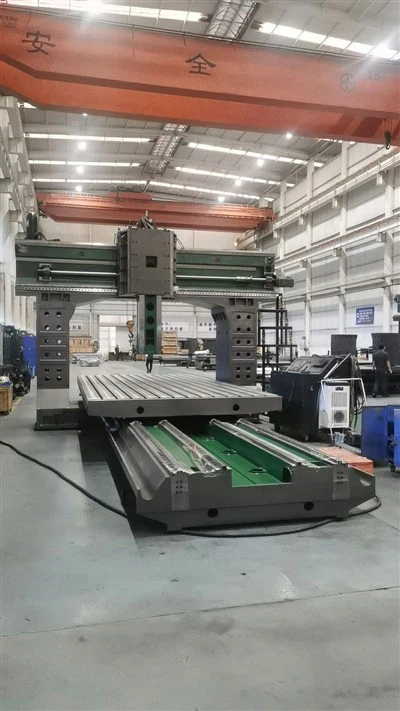
As a supplier of drilling and tapping centers, I understand the significance of cutting speed in these machines. It is a multi – faceted parameter that depends on various factors such as workpiece material, tool material, and tool geometry. Optimizing the cutting speed is essential for achieving long tool life, good surface finish, and high productivity.
Horizontal Milling Machine If you are in the market for a drilling and tapping center or need advice on optimizing the cutting speed for your machining operations, I encourage you to reach out to us for a detailed discussion. We have a team of experts who can provide personalized solutions based on your specific requirements. We look forward to the opportunity to work with you and help you enhance your manufacturing processes.
References
- Kalpakjian, S., & Schmid, S. R. (2009). Manufacturing Engineering and Technology. Pearson Prentice Hall.
- Trent, E. M., & Wright, P. K. (2000). Metal Cutting. Butterworth – Heinemann.
- ASM Handbook Committee. (2000). ASM Handbook Volume 16: Machining. ASM International.
Smartech Machinery & Equipment Co., Ltd.
As one of the most professional tapping center machine manufacturers and suppliers in China, we also support customized service. Please rest assured to buy bulk tapping center machine made in China here from our factory. Contact us for more details.
Address: Room 2832, Changping Commercial Mansion, Shihua Road, Futian Free Trade Zone, Shenzhen, China
E-mail: smartech@smartechcnc.cn
WebSite: https://www.smartech-cnc.com/
