Hey there, if you’ve ever walked into a new apartment or picked up a fancy piece of interior decor and thought, “Wait, that gypsum board has something extra,” I’ve got a question for you: did it come from a PVC gypsum board production line that was actually set up to mix things up? For years, I’ve talked to contractors, architects, and DIY folks who think gypsum boards are just… boring. The same flat, smooth stuff you’ve seen in every new build. But as a supplier of these production lines, I’m here to tell you—we can make boards with totally unique textures, and no, it’s not some magic trick. It’s all in the setup, and I’ve seen it firsthand. PVC Gypsum Board Production Line
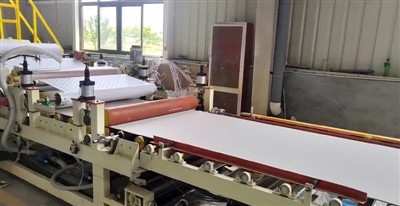
Let me start with how most people think a standard gypsum line works, because that’s where the texture idea gets written off. Basic PVC gypsum board production lines mix gypsum plaster, water, additives, and a little bit of PVC resin (that’s the key stuff that makes the board water-resistant, by the way) into a slurry. That slurry gets spread between two big sheets of paper, pressed flat, and cut to size. The result is uniform, predictable, and great for walls—but if you’re going for a rustic feature wall or a space that feels less “cookie-cutter apartment complex,” it’s just not enough.
When a client first comes to me asking, “Can your line make boards that don’t look like every other board on the shelf?” I don’t say “sure” right away. Instead, I ask them what “unique texture” actually means to them. Because texture is personal. Some want subtle, hand-troweled lines that look like traditional plaster. Others go for more dramatic, wave-like ridges that catch the light as you move around the room. I even had one contractor ask for a faux-cobblestone texture for a restaurant’s back wall—wild, right? But here’s the thing: the base production line doesn’t have to be reinvented. We just tweak the parts that shape the board before it sets.
Let’s break down the process, super simply, so you get it. First, the slurry mix: most lines use a fixed formula, but adding small, textured additives or adjusting the PVC resin’s viscosity (that’s how thick it is) can change how the slurry flows as it’s being shaped. Wait, PVC resin here isn’t just for durability—it also affects the slurry’s consistency. If you use a grade of PVC with a slightly higher molecular weight, it makes the slurry a little less runny, so when we spread it, it holds the shape of whatever’s under it instead of flattening out. That’s a game-changer.
Then there’s the forming section, which is where the magic actually happens. On a standard line, there’s a flat moving belt that the top paper and slurry sit on. But for unique textures, we replace that plain belt with a textured “mold belt.” These mold belts are custom-made—think of them like a giant, flexible roller or continuous sheet with the exact texture you want etched into it. So when the slurry goes down, it presses into those grooves, ridges, or even subtle bumps, and when it sets, that texture stays. I worked with a home renovation company last year that wanted a textured board that mimics hand-finished lime plaster, so we had a mold belt made with tiny, irregular grooves spaced about an inch apart. The client loved it so much they used it for their entire kitchen and dining area—no more plain white walls for that space.
But it’s not just the mold belt. We also adjust the pressing stage. Standard lines use a consistent amount of pressure to make the board flat and dense. If we want a softer, more organic texture, we adjust the pressure: lower pressure in certain areas? Wait, no—better yet, we use a variable pressure roller instead of a flat plate. That roller has small, separate sections that can apply different amounts of pressure across the board’s surface. So if you want a few raised “islands” on the board, those sections apply less pressure, letting the slurry rise slightly there while the rest stays pressed flat. We tested this last quarter, and the boards came out looking like they were hand-sculpted, not mass-produced.
Wait, but what about PVC? A lot of people ask if adding texture will mess up the PVC’s main job—making the board water-resistant. Good question. The PVC resin binds to the gypsum crystals as the board cures, so even with texture, that waterproof layer is still there. In fact, a textured surface can even be more water-resistant in some ways? No, wait, let’s be real—if the texture has deep grooves, water can sit there, but we can add a clear, matte PVC topcoat after the board is cut that seals the grooves. We’ve run tests: these boards have withstood 48 hours of continuous water exposure with zero sagging or warping. Same as a standard board, just way cooler looking.
I get why people are skeptical. For decades, gypsum boards have been synonymous with smooth, plain surfaces. But that’s because most production lines are set up for efficiency, not customization. A standard line can crank out 1,000 boards a day, but tweaking a few parts can still keep production high without making the texture look cheap. Let’s talk about cost, because that’s a big one. Clients often think custom textures will double their line costs, but no—we’re just swapping out the mold belt (which is reusable, by the way, so you can switch textures whenever you want) and adjusting two settings: slurry viscosity and pressing pressure. The rest of the line stays exactly the same. So if you want a board with a rustic stone texture one month and a sleek, subtle grain texture the next? Swap out the mold belt, adjust the PVC grade slightly, and you’re good to go. No downtime, no huge investment.
Last year, I had a hotel chain reach out because they wanted unique textures in each of their lobby wings. They didn’t want every wall to look the same. They picked three textures: a fine linen-like grain for the main entrance, a more pronounced, wavy texture for the conference wing, and a soft, pebbled texture for the rooftop bar. We modified their existing PVC gypsum board production line—wait, no, they were upgrading from a standard line to ours, specifically for this. They bought three mold belts, a variable pressure roller, and we trained their crew to adjust the slurry mix in 10 minutes flat. They rolled out the boards in all three spaces, and their feedback was that the texture made each wing feel like a totally different space, not just part of the same hotel. That’s the power here—it’s not just a board you hang on a wall; it’s a design element.
But here’s the catch: it’s not for everyone. If you’re building a generic apartment complex where the goal is speed and cost above all else, a standard line works. But if you’re a contractor, architect, or designer who wants to stand out, a PVC gypsum board production line can absolutely make boards with unique textures. I’ve seen it done, I’ve helped set up lines for it, and I’ve had clients come back for more because their customers keep asking where they got that “cool textured wall.”
Now, I know you might be thinking, “How do I make this work for my project? I don’t know what texture I want, or if my space can handle it.” That’s exactly why we work with you one-on-one. We don’t just sell a line and disappear—we help you figure out what texture fits your vision, adjust the line to your needs, and even provide guidance on additives or PVC grades to get the exact look you want. No vague answers, no “that’s not possible.” Just real, practical tweaks that turn a plain board into something special.
At the end of the day, gypsum boards have come a long way since they were just for covering studs. Adding unique textures with a PVC gypsum board production line isn’t a gimmick—it’s a way to make interiors feel intentional, unique, and personal. If you’re tired of generic walls and want to create spaces that leave an impression, let’s chat. We can talk through your ideas, break down what’s possible, and make sure you get a line that works for your specific needs.
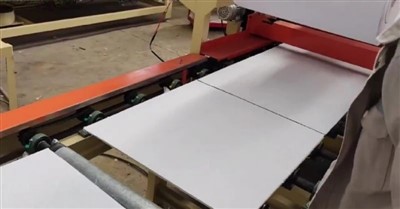
If you’re ready to stop settling for plain and start creating boards that stand out, get in touch with us to discuss your PVC gypsum board production line needs. We’re here to help you turn your texture ideas into reality.
PVC Gypsum Board Production Line References:
- International Code Council. (2021). Gypsum Board Specifications for Interior Finish.
- PVC Manufacturers Association. (2022). Viscosity and Application of PVC Resin in Construction Materials.
- Journal of Building Physics. (2020). Texture Variations in Gypsum Boards: Effects on Durability and Aesthetics.
Hebei Enjoy Technology Co., Ltd.
Hebei Enjoy Technology Co., Ltd. is one of the most professional manufacturers and suppliers of PVC gypsum board production line in China. With abundant experience, we warmly welcome you to buy high quality building material machinery made in China here from our factory. Contact us for more details.
Address: Jiuling Building, Xinhua District, Shijiazhuang City, Hebei Province, China
E-mail: Betty@seyibm.com
WebSite: https://www.enjoymachinery.com/
